-
Sami
- March 25, 2026
Navigating an aerial adventure park or a high ropes facility requires more than just physical agility and a sense of bravery. The foundation of a successful and secure experience lies in the quality and suitability of the safety equipment being used.
Among the various pieces of gear, the most critical component is the one that directly secures the participant to the safety lines. Selecting the right equipment ensures that everyone involved can focus on the thrill of the obstacles without compromising their personal protection.
This article examines the vital considerations for identifying a reliable ropes course harness for your aerial adventure or professional facility.
Verifying International Safety Certifications and Compliance
The primary concern when evaluating any life-safety equipment is its adherence to globally recognized manufacturing standards. Every professional ropes course harness must undergo rigorous testing to receive certifications such as those from the UIAA or CE.
These bodies ensure that the materials can withstand specific fall forces and long-term mechanical stress. Before committing to a purchase or outfitting a park, it is essential to verify that each unit carries the appropriate documentation.
Using uncertified or outdated equipment is a significant risk that no operator or enthusiast should ever take, regardless of the perceived quality of the design.
Assessing Material Durability and Resistance to Wear
Adventure parks are demanding environments where equipment is frequently exposed to UV rays, moisture, and constant friction against wooden poles or steel cables.
Consequently, a ropes course harness should be manufactured from high-tenacity synthetic webbing that is specifically designed for high-abrasion resistance.
Reinforced stitching at the primary attachment points and robust metal buckles are indicators of a high-quality product.
By investing in durable materials, you not only enhance the safety of the participants but also extend the operational life of the gear, leading to better long-term value for the investment.
Ensuring Adjustable Sizing for Diverse Body Types
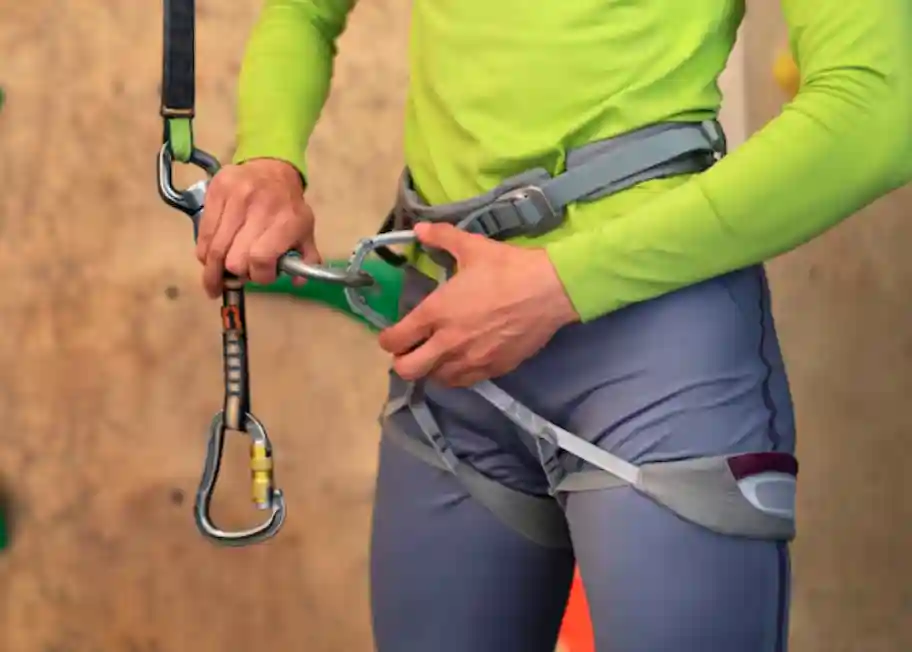
Aerial adventures attract participants of all shapes and sizes, making the adjustability of the gear a practical necessity. A well-designed ropes course harness will feature multiple points of adjustment on the waist and legs to ensure a snug and secure fit for every individual.
For commercial parks, it is beneficial to choose models that are easy to tighten and loosen, often featuring auto-locking buckles to prevent accidental slips.
A correctly fitted harness prevents the user from sliding out during an inversion and ensures that any fall forces are distributed safely across the body frame.
Prioritizing User Comfort and Ergonomic Design
While safety is the main priority, the comfort of the user significantly impacts their overall enjoyment of the course. Advanced models often include padded waist belts and breathable mesh linings to reduce pressure points and manage perspiration.
A ropes course harness that is ergonomically designed allows for a full range of motion, which is essential for tackling complex transitions and zip lines.
If a participant is distracted by a pinching strap or an ill-fitting leg loop, their focus on the safety protocols may waver, which can lead to unnecessary fatigue or errors during the activity.