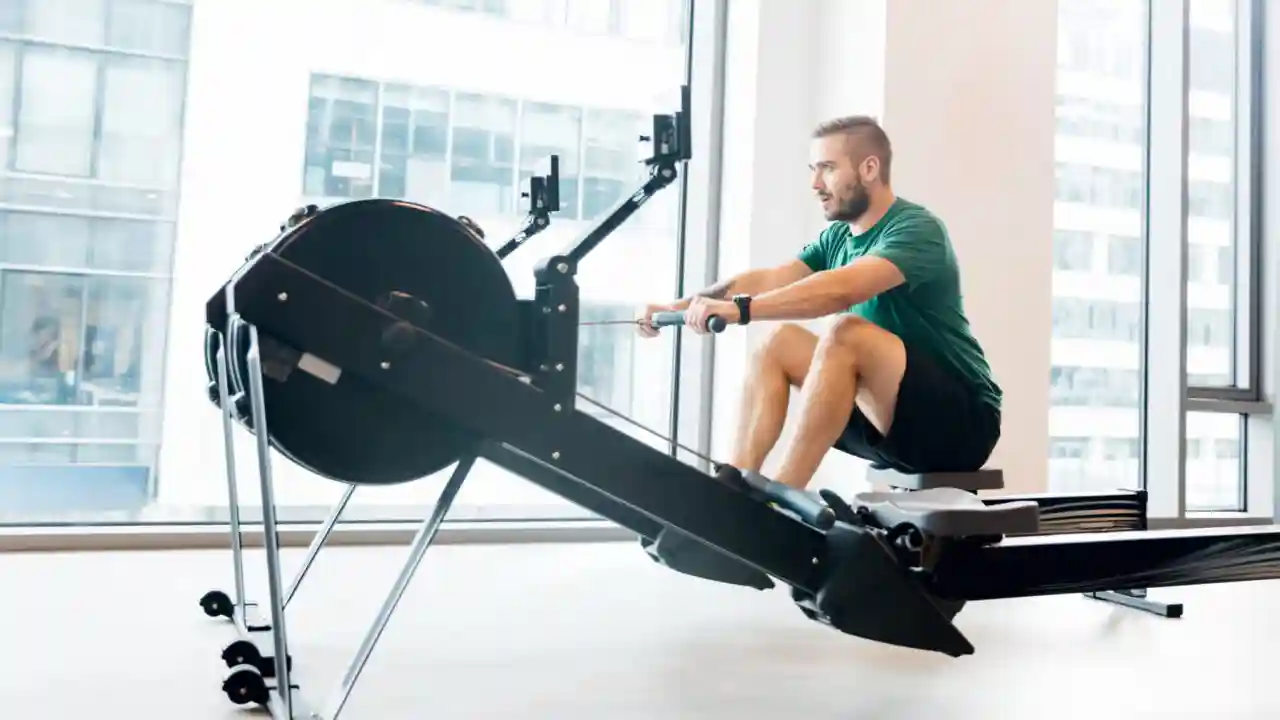
Indoor rowing is one of the most effective and underrated forms of exercise available to home gym users. It delivers a powerful cardiovascular workout, engages the majority of the body’s major muscle groups in every stroke, and is gentle enough on the joints to be sustained over a lifetime of training.
For anyone looking to establish a durable and impactful home fitness routine, a rowing machine is one of the best investments they can make.
Look For Quality Rowing Machine
A quality rowing machine reproduces the rowing stroke using a resistance mechanism that challenges your body with each pull. Air-resistance models are particularly well regarded by fitness enthusiasts because the resistance scales dynamically with the effort you apply, providing an infinitely variable training stimulus that always matches your current output.
Water resistance models offer a similar dynamic feel with the added sensory appeal of audible water movement. Both types are available for home use and deliver an authentic and engaging rowing experience that keeps training interesting over time.
Understanding the Rowing Stroke
Effective and injury-free rowing depends on understanding the correct sequence of the stroke. Each pull begins with the legs driving back against the footrests while the arms remain extended. As the legs reach full extension, the body leans back slightly from the hips, and the arms then draw the handle to the lower chest to complete the drive.
The recovery reverses this sequence: arms extend first, then the body leans forward, and finally the legs compress to return to the starting position. Maintaining this sequence prevents the lower back strain that comes from over-relying on the back during the initial drive.
Building Fitness Through Rowing
Rowing develops fitness across multiple dimensions simultaneously. The sustained cardiovascular demand of a rowing session improves heart and lung capacity, lowers resting heart rate over time, and increases the body’s ability to use oxygen efficiently during exercise.
The muscular demands of the stroke build endurance-oriented strength in the legs, back, and arms that translates well to everyday physical tasks. Compared to exercise modes that target only the lower body or only provide cardiovascular stimulus, rowing delivers a broader fitness return per unit of time invested in training sessions.
Programming Your Rowing Sessions
Effective programming for rowing beginners typically starts with shorter sessions focused on technique before building duration and intensity. Sessions of 15 to 20 minutes at a moderate, sustainable effort level allow new rowers to develop the movement pattern while accumulating cardiovascular stimulus.
Interval training, such as alternating one minute of hard effort with two minutes of easy rowing, can be introduced once the basic stroke feels comfortable. Over several weeks, as endurance improves, session duration and intensity can be increased progressively.
Conclusion
A rowing machine is one of the most complete pieces of home fitness equipment available. By delivering effective cardiovascular conditioning, full-body muscular engagement, and low-impact movement within a single exercise, rowing is uniquely efficient and suitable for a wide range of health and fitness goals.
Getting started requires only a basic understanding of technique, a machine appropriate for your level, and the commitment to train consistently. The physical and health rewards of regular rowing are both rapid and lasting.